
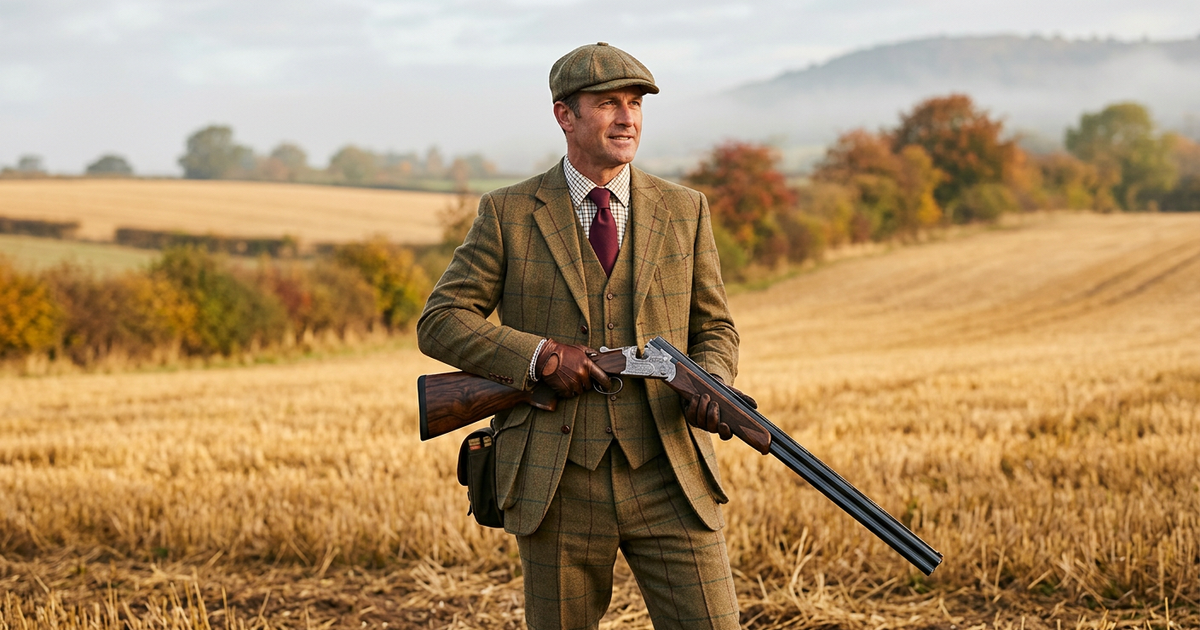
How to choose the best shotgun for driven partridge
The first covey of the season often appears as a blur of motion, rising quickly over the hedgeline before you have finished mounting your gun. Many shooters attribute early-season misses to poor technique, yet the reality is that the equipment itself plays a vital role in success. Choosing the best shotgun for driven partridge is about balancing speed, handling, and fit to ensure that when the birds arrive, your setup works with you rather than against you.
What does driven partridge shooting demand of a shotgun?
Partridge shooting differs significantly from high-bird pheasant days. The birds are smaller, faster, and usually present at ranges between 20 and 30 yards. Because they are often low and crossing, the primary requirement is a gun that mounts instinctively and swings with minimal effort. A heavy or sluggish gun often results in the shooter falling behind the line of the bird, leading to misses behind the target.
The ideal partridge gun feels like an extension of the shooter. It should be light enough to carry comfortably throughout a long day but substantial enough to absorb the recoil of a standard game load. Balance is critical; a gun that is too barrel-heavy feels slow to move, while one that is too stock-heavy feels erratic and difficult to control.
How do side-by-side and over-and-under configurations compare?
The choice between a side-by-side and an over-and-under is often a matter of personal preference and shooting style. Both configurations offer distinct advantages for the driven line.
| Feature | Side-by-Side (SxS) | Over-and-Under (O/U) |
|---|---|---|
| Handling | Fast, lively, traditional | Stable, consistent, modern |
| Sighting Plane | Wide, can obscure close targets | Narrow, clear single plane |
| Recoil Control | Can be punchier | Generally softer due to weight |
Side-by-sides are often favoured for their classic aesthetics and rapid handling. Their lower profile provides a wider field of view, which helps when birds are low to the ground. Conversely, the over-and-under offers a single sighting plane, which many shooters find more intuitive for tracking crossing birds. Consistency is key; if you are accustomed to one configuration, switching mid-season can be jarring.
How do 12-bore and 20-bore dynamics compare?
Gauge choice is a balance between physical strength and the requirements of the drive. The 12-bore remains the standard, offering a vast array of load options and excellent pattern density. However, for a long day on the partridge, a 20-bore is a popular alternative. It is typically lighter and more nimble, which can assist in maintaining speed on fast, low-crossing birds.
A smaller gauge does not mean you are under-gunned, as modern 20-bore cartridges are highly effective at typical partridge ranges. The trade-off is that a lighter gun naturally produces more felt recoil, which may become noticeable if you use heavier loads. If you are considering a 16-bore or 28-bore, these offer even greater portability, though they require more precise shooting to account for tighter patterns.
Why does gun fit matter more than the brand?
You can own a beautifully engraved shotgun, but if it does not fit, you will struggle to hit consistently. Gun fit encompasses length of pull, drop at comb, and cast. When you mount the gun, your eye should look directly down the rib. If you have to adjust your head or neck to see the target, the gun is not fitted to you.
Before the season opens, spend time at a shooting ground to verify your fit. A professional gunfitter can make adjustments that transform your performance. Remember that a modest gun that fits perfectly will always outperform a premium model that requires you to compensate for its dimensions.
How do barrel length and swing dynamics affect your shooting?
Barrel length influences how a gun points and follows through. A 26-inch or 28-inch barrel is often preferred for partridge due to the need for quick movement and rapid target acquisition. These lengths feel lively in the hands. A 30-inch barrel provides a smoother, more deliberate swing, which can be an advantage if you prefer a steady, measured approach to crossing birds. Choose the length that complements your natural swing speed rather than following trends.
What are the ideal choke and cartridge pairings?
For early-season partridge, you rarely need tight chokes. Because the birds are often close, an open choke—such as cylinder or improved cylinder—is usually ideal. This provides a wider, more forgiving pattern at 20 to 30 yards. Using a full choke at these distances can result in a pattern so tight that it becomes difficult to connect with the bird.
Cartridge selection should focus on moderate payloads. A 21g to 28g fibre-wad load is generally sufficient. Shot size No. 7 is a popular choice for early-season birds, offering a dense pattern. Always check the specific requirements of the estate you are visiting, particularly regarding non-toxic shot or specific wad types.
How do you safely source or upgrade a game gun mid-season?
If you find that your current gun is not performing, upgrading mid-season requires a transparent and compliant approach. Buyers must be 18 or older and hold a valid shotgun certificate. All transfers must be processed through a Registered Firearms Dealer (RFD) to ensure the legal record is updated correctly.
Before purchasing, use the GunValue tool to benchmark the price of a second-hand shotgun. This provides an objective look at the market, helping you ensure you are paying a fair price. Most importantly, take advantage of try-before-you-buy facilities at venues like the Lea Marston Shooting Club. Handling a gun in a controlled environment allows you to test the balance and fit before you commit to the purchase.
Once you have selected your gun, perform a thorough inspection. Check the ejectors for smooth operation, ensure the stock bolt is tight, and confirm the safety catch functions reliably. Inspect the barrels for any signs of pitting or damage. By taking these steps, you ensure that your equipment is ready for the first day of the season.
Pre-season checklist for the driven line
- Pattern test your gun at 25 and 30 yards to confirm your point of impact.
- Verify your choke and cartridge combination at the pattern plate to ensure even distribution.
- Ensure your shotgun is serviced and that all mechanical components are functioning correctly.
- Use GunValue to research fair market prices for your next upgrade.
- Book a session at the Lea Marston Shooting Club to shoulder and test potential new guns.
Frequently Asked Questions
What is the best barrel length for partridge?
28-inch barrels are often considered the sweet spot for the fast, instinctive shooting required for partridge. 30-inch barrels are better suited for those who prefer a more deliberate, smooth swing on crossing targets.
Do I need a specific gun for partridge?
Any well-fitted game gun is suitable. The priority is ensuring the gun is light enough to handle quickly and that the chokes are open enough for close-range targets.
How can I test a gun before I buy it?
Venues like the Lea Marston Shooting Club offer try-before-you-buy services. This is the most effective way to ensure a second-hand gun fits your physical requirements and shooting style.
Why should I use an RFD for my gun purchase?
Registered Firearms Dealers handle the legal transfer of shotguns. They manage the necessary licence verification and ensure the transfer is recorded accurately with the relevant authorities, keeping the process compliant and secure.